First, you would get choked flow at the inlet, and if you do the math it actually takes a massive opening to really make a dangerous shockwave.
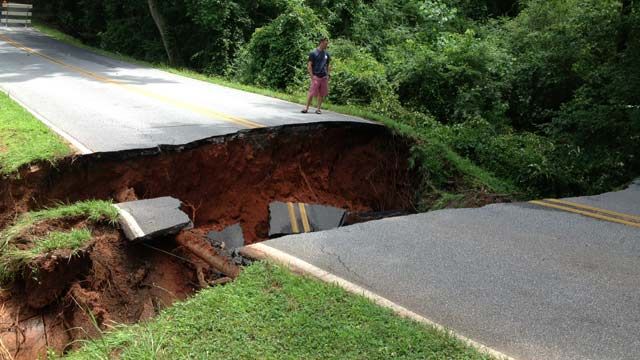
Eg, if a joint in the tube disconnects and the two halves pull apart, the inlet area is the tube circumference * gap between halves. The two halves would need to separate by the full diameter of the tube (~15 ft) to get full atmospheric pressure going in both sides. A realistic gap of a couple inches to a couple feet is far less scary.
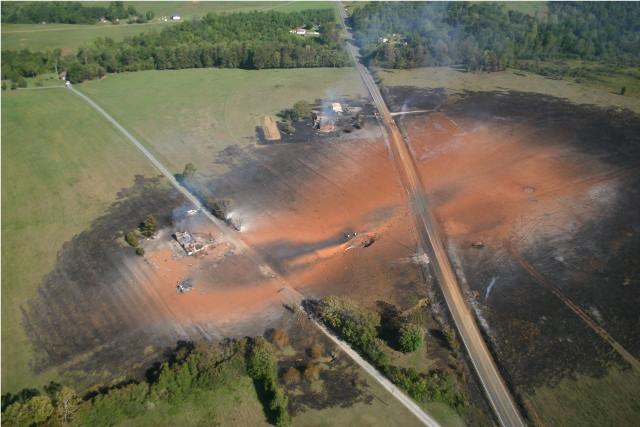
Second, these incidents will be exceptionally rare. Gaps that big are equivalent to a freeway overpass collapsing. It's a total failure scenario, so you see a single digit number of them a year in the US.
Lastly, the speed of sound isn't all that quick on the scale of this thing. It's about 13 miles/min, a fifth of a mile a second.
If you place emergency fill valves (one time use things, dirt cheap, just explosive bolts in the simplest case) you can flood a whole section of the tube with atmosphere in a controlled manner over say 15 seconds, and your shockwave will be largely stopped after 3 miles.
An emergency fill like that would also stop all pods in the region as they hit very high drag, so you don't even need to carry heavy emergency brakes on every vehicle.
Seems like you could also solve this with blast gates. If the tube breaks open behind the train, slam a gate closed to stop additional air from entering. There'd likely be air in the tube already, but with no additional supply, the propellant force would diminish rapidly.
Okay, I was assuming a failure in front of the train. If the failure is behind the train, it's still an extremely solvable problem. Blast gates to stop the inflow of new air. Or inject air in front as nickparker suggested. I don't see that this is a legitimate blocker to this technology.
It's an elevated track so it really could be designed to deal with that kind of break. Water, Oil, and Gas pipelines for example have long dealt with those issues without breaking when designed correctly.
Now doing this without bending the long pipe is going to be harder, but you really could design this thing so riders don't notice a magnitude 9 earthquake.
PS: In the end you get into cost benefit designing it to survive an aircraft impact is probably not worth it let alone a nuke, but predictable earthquakes are not that hard.
I don't understand why a tube section couldn't come away? What if a bomb went off, a truck hit a support beam, or an earthquake caused a section to topple over...